
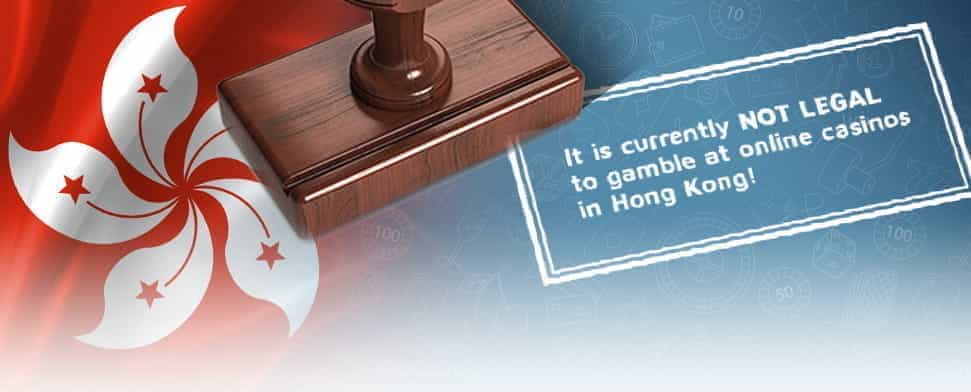
China is imposing a curfew on online gaming for minors, the government has announced. Gamers under 18 will be banned from playing online between 22:00 and 08:00. Police arrested them on suspicion of operating a gambling establishment, assisting the operation of an illegal gambling den or unlawful gambling. In Hong Kong, gambling in an illegal establishment. The main legislation governing gambling in Hong Kong is the Gambling Ordinance (Cap. The general position is that gambling is unlawful unless the act falls within one of the exemptions under. Hong Kong / Law and Crime Hong Kong police arrest 81 in crackdown on string of triad-run gambling dens The gambling dens offered patrons free low-quality crystal meth, and helped them to buy other.
Question:
Quite a number of young entrepreneurs have relayed to me that with a view to promoting their products and services, they have introduced some lucky draw games and activities, so as to attract patronage to their physical or online shops. However, the law enforcement authorities have alleged them of operating gaming activities without obtaining the relevant licences, such as Trade Promotion Competition Licence or Amusements with Prizes Licence, and have indicated that they may invoke the Gambling Ordinance to institute prosecutions against them. Such entrepreneurs have also pointed out that while such games and activities are quite popular in the neighbouring regions and are not against any law in those places, the laws of Hong Kong are overly stringent, thereby hindering their business development and making them unduly worried. In this connection, will the Government inform this Council:
(1) of the details of the law enforcement actions taken in each of the past three years under the Gambling Ordinance against lucky draw games or activities organised in the course of trade promotion (including the respective numbers of cases in which verbal warnings were issued and prosecutions were instituted, and the punishments on the convicted persons); whether it knows the number of types of the games or activities involved which may be legally conducted in the neighbouring regions without obtaining a licence;
(2) when the current requirements of the relevant licences and the penalties were made; whether it will, from the perspective of business facilitation and in the light of the development pace of information technology and the actual situation of online commercial and trading activities, review the regulation of lucky draw games or activities organised in the course of trade promotion, including examining if the relevant licensing requirements and penalties still suit the present circumstances; if so, of the details; if not, the reasons for that; and
(3) as some small business operators have pointed out that the application fees for a Trade Promotion Competition Licence and an Amusements with Prizes Licence are $1,590 and $3,200 respectively which, together with other licensing conditions (e.g. the former requiring licensees to publish details of the draw results in one English and one Chinese newspaper circulating in Hong Kong, while the latter requiring licensees to obtain a Places of Public Entertainment Licence) are a cost of a considerable amount of money for them, whether the authorities will consider relaxing the conditions and lowering the fees for such licence applications?
Reply:
President,
My reply to the question raised by the Hon Shiu Ka-fai is as follows:

Given the great variety of games and variation in related legislation and regulatory approaches in various places, it is hard to make a direct comparison. With the possible differences in such objective considerations as socio-economic development, cultural background, customs and mindset in these places, it follows that their practices are not necessarily applicable to Hong Kong directly.
In Hong Kong, the Gambling Ordinance (Cap. 148), which regulates gaming activities, was enacted in 1977 and was amended several times between 1980 and 2006.
It is the Government's policy not to encourage gambling. This is because unregulated gambling may lead to such serious social problems as frauds, underage gambling and loan sharking, and may become a source of income for triad and criminal activities. Related penalties under the Gambling Ordinance are precisely introduced to deter non-approved gambling, and protect the public from the threats of these activities.
Hong Kong Gambling Laws Rules
In the past three years (from 2014 to March 2017), there was one case that was prosecuted under section 9 of the Gambling Ordinance (i.e. organisation of unlawful lottery), but the person being prosecuted was eventually acquitted.Activities such as Trade Promotion Competitions and Amusements with Prizes involve gaming, holding of which without permission is liable for the same maximum penalties as those gambling crimes which are perceived as more serious by the general public. Such arrangement is to deter people with ulterior motives from making use of these items to pursue gambling activities in disguise, and we consider the existing penalties as appropriate. The Court will make judgement based on the seriousness of individual cases. For examples, there has been a case in which a merchant conducted online lucky draw to promote his business without applying for the Trade Promotion Competition Licence, and hence was prosecuted under section 9 of the Gambling Ordinance for organising unlawful lottery. While it was set out in the Gambling Ordinance that a person, on conviction, is liable to a maximum fine of $5,000,000 and to imprisonment of at most seven years; the merchant, after the case was assessed, was offered no evidence on condition of being bound over in the sum of $1,000.
Similarly for the formulation of licence conditions, the Government has been following the principle of not encouraging gambling. Some examples of the licence conditions include not allowing the offering of money prize for amusements or competitions, the opportunity to win a prize being not the only inducement to participate in Amusements with Prizes, no fee being charged for entering Trade Promotion Competitions, and the competitions being not the core part or main attraction of a business.
In addition, there are licence conditions that are formulated to protect the safety and rights of the participants. For example, one of the conditions for the Amusements with Prizes Licence, as mentioned by the Councillor, is that relevant licence under the Places of Public Entertainment Ordinance shall be obtained for premises in which such amusements are conducted. This is because amusements usually draw crowds. We prescribe that the licenced premises concerned shall meet relevant safety requirements so as to safeguard public safety and order.
As for another condition mentioned by the Councillor, i.e. a condition for the Trade Promotion Competition Licence, it requires a promoter to publish, within 10 days from the date of draw or judging, results of the competition in one English and one Chinese newspaper circulating in Hong Kong and to forward a copy of the relevant newspaper cuttings to the Office of Licensing Authority (OLA). This licence condition serves to ensure that draw results will be published in an open and transparent manner by licensees for protecting the interest of members of the public who have participated.
The Government will also review related arrangements in light of actual circumstances so as to strike a balance between business facilitation and protection of public interest. For example, the requirement of publishing competition results in newspapers, as mentioned above, was amended in 2002. The original condition prescribing that 'competition results shall be published in two English and two Chinese newspapers within seven days from the date of draw' was relaxed to 'competition results shall be published in one English and one Chinese newspaper within ten days from the date of draw'. Keeping abreast with times, OLA nowadays also accepts publishing of draw results by promoters in online newspapers. However, some members of the public are still not used to reading newspapers online, OLA requires promoters to publish draw results in at least one printed newspaper.
Regarding licence fees, it is the Government's policy that fees should in general be set at a level sufficient to recover the full cost of providing the relevant services. Fees for various licences under the Gambling Ordinance are charged in accordance with the 'user pays' principle, with a view to recovering the cost of licence issuance from applicants. OLA will review the level of licence fees on a regular basis.
Issued at HKT 14:37
Whenever gambling is mentioned, the glitzy images of Les Vegas come to mind. America has been considered as a gaming nation for a very long time. However, America is not the world’s biggest gambler as many would think. In fact, the biggest gamblers in the world include countries that are least suspect. The ranking of the 200 gambling countries is based on data provided by H2 Gambling Capital. The ranking takes into account the losses in a year divided by the adult population. The losses include the entire amount lost on all types of gaming including poker, slot machine, horse racing, and casinos.
The Biggest Gambling Countries In The World
Australia
Gambling is so prevalent in Australia that the central bank was led to increase interest rates. Australia allows online wagering on sports. Slot machines are favorite games in the country. New South Wales accounts for half of the country’s total poker machines. Adult gamblers reported a loss of $1,128 per adult with 935 gamblers registered to be banned from casinos between 2006 and 2010. However, these gamblers were caught over 1,200 times for breaching their ban
Singapore
Singapore only opened its first casino in 2010 but has since become one of the largest gambling countries in the world. The opening of casinos in Singapore created worries in the country, with the majority fearing addictions and losses. The government is discouraging gambling by the locals by imposing an entry fee of $81 for locals who wish to enter the casino. Families are also allowed to ban their members from visiting the casinos under the “Family Exclusion Orders.” However, these measures have done little to dampen the gambling spirit in the country. The country recorded $1,174 losses per adult in 2010.
Ireland
Hong Kong Gambling Laws Definition
The casino industry in Ireland is entirely unregulated because the country depends on the old Gaming and Lottery Act of 1956. According to the law of Ireland, only registered members’ club is allowed to offer casino services. Bets on gaming machines are not allowed beyond 6 pence while the rewards for gaming are allowed up to 10 shillings. However, this law cannot be enforced since the Irish pound has not been in use as a legal tender since 1999. The huge losses by gambling adults which average $588 per adult have forced the government to start enacting laws that will help regulate the gaming industry in Ireland.
Hong Kong Gambling Laws Regulations
Canada
Over 75% of Canadian adults have been involved in at least one form of gambling. The highest number of gamblers in the country comes from Saskatchewan. The province has gambling revenue of $841 per person above the age of 18 years. The popular gambling games in Canada include lottery and scratch and win. The popularity of lottery games in Canada has led to the government setting up initiatives to discourage giving of lottery tickets to minors as gifts. Canada recorded $568 gaming losses per adult
Finland
Hong Kong Gambling Laws Act
Over 41% of the adult population in Finland gambles weekly, according to the Ministry of Social Affairs and Health. The minimum age for gambling in the country was raised to 18 years in 2011 from 15 in the previous years in a bid to discourage gambling among children. The national lottery company in Finland is a property of the government and is managed by the Ministry of Education with the revenue from the company channeled to education, culture, and arts. The Paf Group of Finland, running the internet gambling company, offers paybacks to its loyal customers who spend at least $171.40 on its site but are certified to be suffering from gambling addiction. Finnish gamblers lose an average of $553 per adult.